Add up the running watts of everything you want on at the same time, then add the starting watts of the single biggest motor, such as a fridge or well pump. For outage essentials (fridge, freezer, sump pump, lights, chargers) that usually lands around 3,000–4,000 W. Central air conditioning pushes you into home standby territory.
Key facts
- Generator size = total running watts + the largest single starting load (only one motor starts at a time).
- A refrigerator runs on about 150 W but can need about 2,200 W for the split second its compressor starts.
- Generators have two ratings: rated (continuous) watts and maximum (starting) watts. Honda's EG3500X manual limits use at maximum power to 30 minutes.
- Franklin Electric's minimum generator sizes for submersible well pumps are 2 kW (1/2 HP), 3 kW (3/4 HP) and 4 kW (1 HP), and 50% more for 2-wire motors.
- Generac's sizing guide notes a 3-ton central AC runs on about 3.5–5 kW but can need far more to start.
How do I figure out what size generator I need?
The first three steps are the method generator makers and utilities publish; the fourth keeps you out of trouble. You need a pen, the labels on your appliances (or our appliance wattage list), and a clear idea of what you want running at the same time.
- List the loads you want on together. Be honest about what you would really use in an outage: food storage, water, heat or cooling, lights, phones and internet. Leave out anything you can run one at a time.
- Add up the running watts. Running (rated) watts are what each item draws once it is going. Check the rating label, or use a typical figure.
- Add the single biggest starting load. Motors and compressors need a short burst of extra power to start. Find the item on your list with the highest starting watts and add that one figure to your running total. You don't add every surge, because motors start one at a time and each surge lasts less than a second.
- Leave headroom. Choose a generator whose rated (continuous) watts cover your running total with room to spare, and whose maximum (starting) watts cover the total from step 3. Running a generator at its maximum output is a short-term rating, not an everyday one.
Our generator size calculator does this math for you, using the same appliance figures as the table below.
Generator size chart: watts for common appliances
These are typical US figures. Your own appliance may differ, so check its label when you can, especially for pumps and air conditioners.
| Refrigerator120 V | 150100–250 | 2,200 | 1.45 |
|---|---|---|---|
| Chest freezer120 V | 8050–150 | 2,200 | 0.6 |
| Microwave120 V | 1,500800–1,700 | — | 0.5 |
| Space heater120 V | 1,500750–1,500 | — | 6 |
| Window air conditioner120 V | 660440–1,200 | 1,500 | 3.2 |
| Central air conditioner240 V | 3,5002,000–6,000 | 7,000 | 29.4 |
| Furnace blower120 V | 500150–1,000 | 1,400 | 4.2 |
| Sump pump120 V | 1,000700–1,300 | 2,150 | 1.2 |
| Well pump240 V | 1,000670–1,600 | 2,100 | 1.5 |
| Electric water heater240 V | 4,5003,500–5,500 | — | 13.5 |
| Washing machine120 V | 500350–1,150 | 1,200 | 0.25 |
| Electric clothes dryer240 V | 5,0001,800–5,800 | 6,500 | 2.6 |
| TV120 V | 8050–200 | — | 0.4 |
| Wi-Fi router and modem120 V | 156–35 | — | 0.36 |
| CPAP machine120 V | 227–44 | — | 0.18 |
| LED light bulb120 V | 95–20 | — | 0.03 |
Starting watts only matter for motor and compressor loads. Heaters, microwaves, coffee makers and electronics have no meaningful start surge, so you count only their running watts. Many charts list the full starting figure, which already includes the appliance's own running draw, so adding it on top of the running total gives a slightly cautious answer. That small cushion is useful. For more on why surges happen, read running vs starting watts.
What size generator do I need for outage essentials?
Here is a typical list for keeping food cold, the basement dry and the family connected:
| Item | Running watts | Starting watts |
|---|---|---|
| Refrigerator | 150 | 2,200 |
| Chest freezer | 80 | 2,200 |
| Sump pump (1/2 HP) | 1,000 | 2,150 |
| 6 LED bulbs | 54 | none |
| TV | 80 | none |
| Wi-Fi router and modem | 15 | none |
| 2 phone chargers | 30 | none |
| Total | 1,409 | largest: 2,200 |
Running total: 1,409 W. Add the biggest single starting load (2,200 W for the fridge or freezer) and you get about 3,600 W. A generator in the 3,000–4,000 W class, with rated watts comfortably above 1,400 W and maximum watts near 3,600 W, covers this list.
Want to make coffee or use the microwave? A 1,500 W microwave raises the running total to about 2,900 W and the peak to about 5,100 W. You can either step up a size or run the microwave for a few minutes at a time with the fridge and freezer unplugged, so their compressors can't start on top of it. Load management like this is the cheapest way to get more out of a smaller generator.
What size generator do I need with a well pump?
A well pump is one of the hardest loads in a house to start. Using the essentials list above plus a 1/2 HP pump (about 1,000 W running, about 2,100 W starting):
- Running total: 1,409 + 1,000 = 2,409 W
- Largest starting load: 2,200 W (fridge), just above the pump's 2,100 W
- Peak: about 4,600 W
That math works for a small pump, but bigger pumps change the picture. Franklin Electric, a submersible motor maker, sets minimum generator sizes of 2 kW for a 1/2 HP motor, 3 kW for 3/4 HP and 4 kW for 1 HP, for the pump alone, and asks for 50% more when the motor is a 2-wire type. A 1 HP 2-wire pump therefore needs about 6 kW of generator just for itself, before the fridge and lights.
Two more things matter with well pumps:
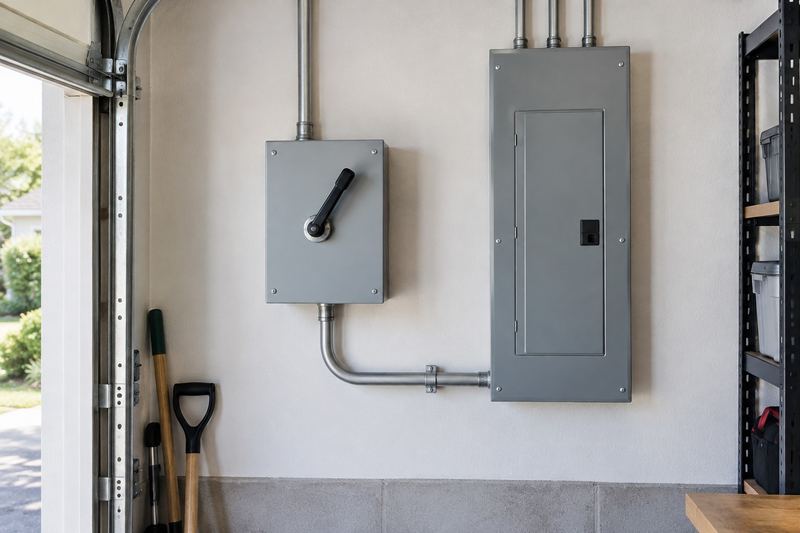
- Voltage. Most US well pumps run on 240 V and are hard-wired. You need a generator with a 240 V outlet and a transfer switch or interlock installed by a licensed electrician.
- The pump label. Check the horsepower and whether it is a 2-wire or 3-wire motor before you buy. If you aren't sure, a well contractor can tell you.
What size generator do I need to run a whole house?
Once central air, an electric water heater, an electric range or a dryer enter the list, the numbers climb fast. A worked example for a home with a 3-ton central air conditioner:
| Load | Running watts | Starting watts |
|---|---|---|
| Essentials list above | 1,409 | 2,200 |
| Well pump (1/2 HP) | 1,000 | 2,100 |
| Central AC (about 3 tons) | 3,500 | 7,000 |
| Furnace or air-handler blower | 500 | 1,400 |
| Microwave | 1,500 | none |
| Total | 7,909 | largest: 7,000 |
That comes to about 14,900 W at the moment the AC compressor starts, and it doesn't yet include an electric water heater (about 4,500 W) or an electric dryer (about 5,000 W). Add those and you are past 20,000 W.
Generac's sizing guide says a 3-ton AC can need far more than our typical figure at start-up, and it pairs AC homes with home standby generators in roughly the 14–22 kW range, often with load managers or a soft-start kit on the AC. At this size you are looking at a permanently installed standby generator with an automatic transfer switch, not a portable. Have a licensed electrician or authorized dealer do a load calculation for your house; most areas require a permit and inspection.
If you don't need AC during an outage, the same house may be fine on a much smaller portable unit powering the essentials list through a transfer switch.
Does a generator's size rating mean running or starting watts?
Usually the bigger number on the box is the maximum (also called peak or starting) watts. The rated (running or continuous) watts are lower. Honda's EG3500X manual, for example, lists 3,000 W rated and 3,500 W maximum output and says to limit operation at maximum power to 30 minutes. Size your running total against the rated figure and your peak against the maximum figure.
Also check the outlets. A generator's 120 V, 20 A receptacle can deliver only 2,400 W, however big the generator is. Our watts to amps converter helps you check each outlet and cord.
How do I connect a generator safely?
- Run it outdoors only. The CPSC says to keep portable generators at least 20 feet from doors, windows and vents, because generator exhaust contains deadly carbon monoxide. Never run one in a garage, even with the door open.
- Plug appliances into the generator with heavy-duty outdoor extension cords sized for the load, or have a licensed electrician install a transfer switch or interlock.
- Never backfeed your house by plugging the generator into a wall or dryer outlet. It is illegal, it bypasses your home's protection, and it can electrocute utility workers.
Our generator safety guide covers CO alarms, refueling and cords in more detail.
Questions people ask
How big of a generator do I need to run a refrigerator?
A refrigerator runs on about 150 W but needs about 2,200 W for a moment to start its compressor. A generator with at least 2,200–2,500 W of maximum output can run a fridge plus a few lights and chargers.
Will a 5,000-watt generator run a house?
It can run the essentials, such as a fridge, freezer, sump pump, lights, internet and a small well pump, if you don't start everything at once. It won't run central air, an electric water heater or an electric range along with them.
What size generator do I need for central air?
A typical 3-ton system runs on about 3,500 W and needs much more to start, so the whole house usually ends up needing a home standby generator in the mid-teens of kilowatts or more. A soft-start kit and load management can reduce the size needed.
Should I add every appliance's starting watts?
No. Add up all the running watts, then add only the single largest starting load. Motors start one at a time and each surge lasts under a second.
How much headroom should I leave?
Choose a generator whose rated (continuous) watts are comfortably above your running total, not equal to it. Maximum watts are only for short bursts, such as motor starts.
Sources
- Generac: What size generator do I need?
- Eugene Water & Electric Board: Generator sizing considerations (PDF)
- Franklin Electric: Submersible motors application, installation and maintenance manual (PDF)
- Generac: Portable generator brochure with wattage reference chart (PDF)
- Honda Power Equipment: Generators guide with appliance wattage chart (PDF)
- Honda Power Equipment: EG3500X owner's manual (PDF)
- U.S. Consumer Product Safety Commission: Portable generator safety alert (PDF)