An inverter generator converts its engine's raw output to DC and back into a clean, steady 120 V AC wave, letting the engine slow down at light loads. The result is cleaner power for electronics, lower fuel use and less noise. A conventional generator runs at a fixed speed and gives more watts per dollar, which suits big loads.
Key facts
- Generac rates its inverter generators at 3% total harmonic distortion (THD) or less and says standard portables are typically 9–15%, some reaching 30%.
- Generac treats under 6% THD as clean power suitable for sensitive electronics.
- Conventional generators must turn at 3,600 RPM to make 60 Hz power; inverters can throttle down to match the load.
- Honda says its Eco-Throttle system can reduce fuel consumption by up to 40%.
- Many inverter generators can be linked in parallel with a second compatible unit to roughly double available power.
What is an inverter generator?
Every portable generator is an engine turning an alternator. The difference is what happens to the electricity next.
- Conventional generator: the alternator's output goes straight to the outlets. To produce 60 Hz power, the engine has to spin at a fixed 3,600 RPM, whether you are running a phone charger or a well pump.
- Inverter generator: the alternator's output is converted to DC, then a microprocessor-controlled inverter rebuilds it into a smooth 60 Hz AC wave. Because the electronics set the frequency, the engine can speed up and slow down with demand.
Honda's generator guide notes that inverter models are also smaller and lighter, because power is created electronically rather than by a conventional alternator alone.
Is inverter generator power cleaner?
Power quality is measured as total harmonic distortion (THD): how far the voltage wave strays from a perfect sine wave. Generac's support pages give these ranges:
| Generator type | THD (per Generac) |
|---|---|
| Generac inverter generators | 3% or less |
| Generac home standby generators | under 5% |
| Standard portable generators | typically 9–15%, some up to 30% |
Generac calls output under 6% THD clean power and says higher distortion can make sensitive electronics such as computers, TVs and phones fail early. Not every conventional generator is "dirty," though: Generac lists several of its conventional portable lines under 6%. If clean power matters, look for a published THD figure on the spec sheet rather than assuming from the generator type.
Do I need an inverter generator for sensitive electronics?
For anything with a microprocessor, clean power is the safer choice. That includes laptops, TVs, routers, gaming consoles, furnace control boards, appliances with electronic controls and variable-speed (inverter) motors such as mini-splits. Our appliance data flags several of these, including the furnace blower, as preferring an inverter generator or a pure sine wave power station.
Medical devices such as CPAP machines also run on electronics. Ask your equipment supplier or doctor what backup power they recommend, and register with your utility's medical program if it has one. Our CPAP power outage guide covers the options.
Simple resistive loads (space heaters, kettles, incandescent lamps) and basic motors are far less fussy, which is why conventional generators are common on job sites and for whole-house backup.
Are inverter generators more fuel efficient?
At light loads, yes. A conventional generator burns fuel to hold 3,600 RPM all the time, even if it is only running a fridge and a few lights. An inverter generator can idle down until demand rises. Honda says its Eco-Throttle system cuts fuel consumption by up to 40% and lowers exhaust emissions.
The gap narrows as the load rises. Near full output both types run hard. Honda's EU3200i spec, for example, lists 3.3 hours of runtime at rated load and 8.6 hours at quarter load on its 1.2-gallon tank, so how much you load the generator changes runtime far more than which type it is.
Most outage loads are small for long stretches (a refrigerator runs on about 150 W and cycles on and off), which is where throttling down pays off.
How quiet are inverter generators?
Inverter generators are generally quieter, for two reasons: they spend much of their time at lower engine speed, and most are enclosed in a sound-damping case. Honda describes its inverter models as substantially quieter than its traditional ones.
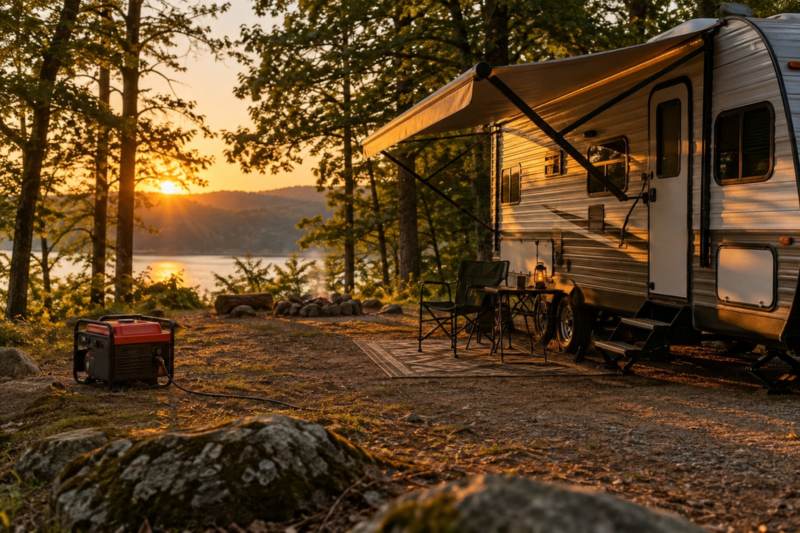
Published noise figures depend on load and measuring distance, so compare like with like. Honda lists its EU3200i at 58 dB(A) at rated load and 54 dB(A) at quarter load. When you compare models, check which load each figure was measured at. Campgrounds and parks often set noise limits and generator hours, which is one reason inverter models are popular with RV owners; see what size generator for an RV.
What is a parallel kit?
Many inverter generators can be linked to a second, compatible unit with a parallel kit (a set of connecting cables, sometimes with its own outlet panel). Honda says pairing two identical units doubles power capacity, letting two small, portable generators do the job of one larger one. Champion describes the same idea for RV use: connect two compatible inverters when you need more power, and run just one when you don't.
Check the owner's manual for which models can be paired; typically it must be the same model or one the maker lists as compatible.
Inverter vs conventional generator: side-by-side
| Feature | Inverter generator | Conventional generator |
|---|---|---|
| Power quality | Low THD; Generac rates its inverters at 3% or less | Varies; Generac says standard portables are typically 9–15% |
| Engine speed | Varies with load | Fixed at 3,600 RPM |
| Fuel use at light load | Lower (Honda: up to 40% less with Eco-Throttle) | Higher |
| Noise | Generally quieter, usually enclosed | Generally louder, often open frame |
| Size and weight | Smaller and lighter for the same output | Bulkier |
| Parallel capability | Common | Uncommon |
| Cost per watt | Higher | Lower |
| Best for | Electronics, camping, RVs, quiet neighborhoods | Large loads, 240 V well pumps, whole-house backup on a budget |
Which is cheaper?
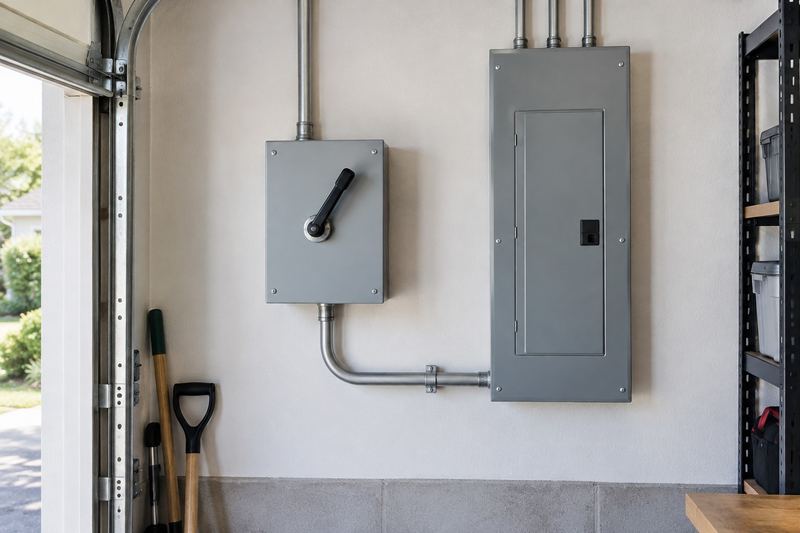
For the same wattage, conventional generators usually cost less, and the gap grows at higher outputs. That is why many households that need 240 V for a well pump or want to run several large loads through a transfer switch choose a conventional model. Inverter generators cost more up front but can recover some of that in fuel at light loads, and two smaller units in parallel can be easier to move and store than one big one.
Start by sizing your loads with the generator size calculator, then decide which type fits how you will use it. If most of your needs are small and quiet, a portable power station may be worth comparing too.
Is an inverter generator safer?
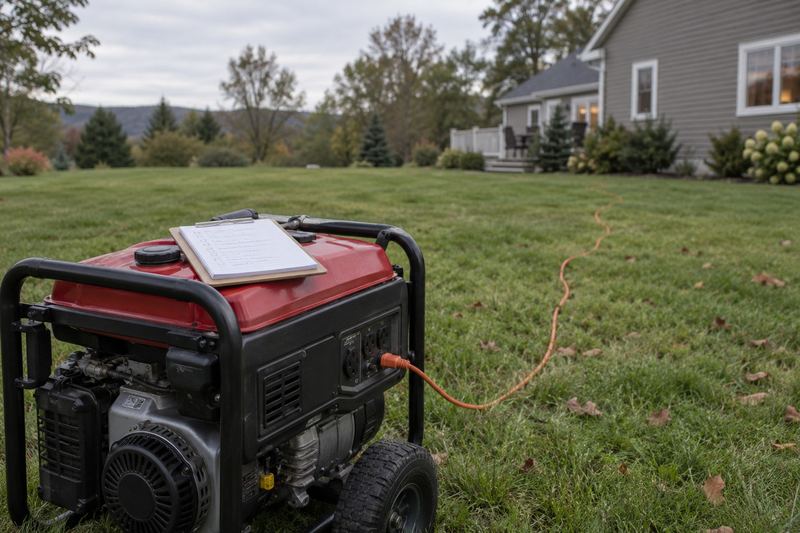
No. Both types burn fuel and make carbon monoxide. Run any generator outdoors only, at least 20 feet from doors, windows and vents, as the CPSC advises, and never in a garage or under a porch roof that traps exhaust. Never plug a generator into a house outlet to backfeed the wiring; use extension cords or a transfer switch installed by a licensed electrician. See our generator safety guide.
Questions people ask
What is the difference between an inverter generator and a regular generator?
A regular generator sends its alternator output straight to the outlets at a fixed 3,600 RPM. An inverter generator converts the output to DC and back into a clean AC wave, so the engine can slow down at light loads.
Can I run a refrigerator on an inverter generator?
Yes, if its maximum watts cover the fridge's start surge of about 2,200 W along with whatever else is running. A fridge runs on only about 150 W once started.
Is it safe to plug a laptop or TV into a conventional generator?
It depends on the generator's THD. Generac considers under 6% safe for sensitive electronics and says standard portables are often 9–15%, so check the spec sheet or use an inverter generator.
Can an inverter generator power a whole house?
Usually not. Most are sized for essentials or an RV, and many lack 240 V output. Whole-house backup with central air typically calls for a home standby generator.
Can I connect two different inverter generators in parallel?
Only if the manufacturer lists them as compatible. Most parallel kits are designed for two units of the same model.
Sources
- Generac: What is total harmonic distortion (THD)?
- Generac: Are home standby generators safe to power sensitive electronics?
- Honda Power Equipment: Inverter generator advantages
- Honda Power Equipment: EU3200i specifications
- Honda Power Equipment: Generators guide (PDF)
- Champion Power Equipment: 6 questions to ask when choosing an RV generator
- U.S. Consumer Product Safety Commission: Portable generator safety alert (PDF)