During a power outage, power things in this order: powered medical devices first, then the refrigerator and freezer, a sump pump if water is rising, the furnace blower if it's cold, and finally communications such as phones, the router or Starlink. Skip big heat-making loads like space heaters, ovens, dryers and electric water heaters.
Key facts
- FoodSafety.gov says a closed refrigerator keeps food safe for up to 4 hours without power.
- A full freezer holds a safe temperature for about 48 hours, or about 24 hours if half full, as long as the door stays closed.
- A typical fridge, chest freezer, 1/2 HP sump pump, furnace blower and a few small electronics total about 1,900 running watts.
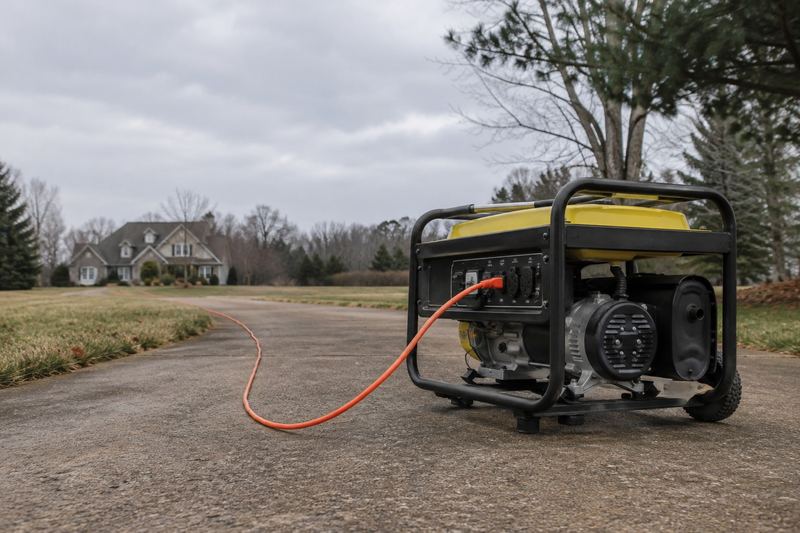
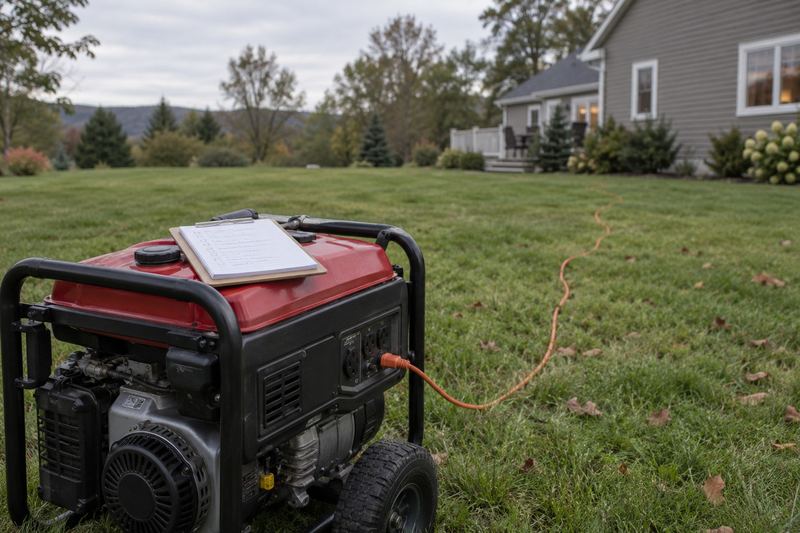
- CPSC says to run generators outdoors only, at least 20 feet from doors, windows and vents, and never to backfeed house wiring through an outlet.
What should you keep running first?
Start from what protects health and safety, then what protects property, then what makes the outage easier. Running watts below are typical figures from our appliance data.
Tier 1: powered medical devices
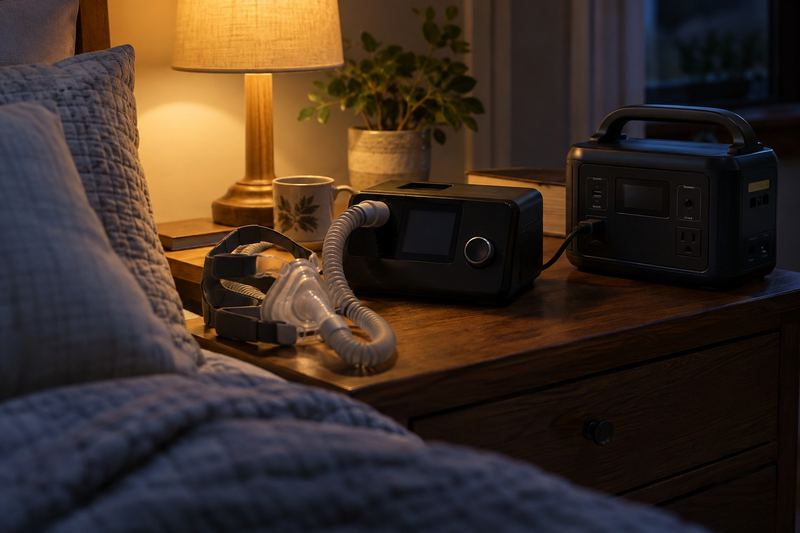
A CPAP uses about 7–10 W with the humidifier off and about 22 W with it on. That's easy for even a small power station. A 5-liter home oxygen concentrator uses about 350 W, enough to drain a 1,000 Wh power station in roughly 2.5 hours. Oxygen suppliers commonly advise keeping backup cylinders as the main outage plan, so ask yours.
If anyone in your home depends on powered medical equipment, talk to your doctor and equipment supplier about a backup plan. Ask your utility whether it has a medical or priority-notification program. Utilities that run these programs say they still can't guarantee your power stays on. See our CPAP backup guide.
Tier 2: refrigerator and freezer
Food is usually the biggest money at risk. FoodSafety.gov gives these times, all with the doors kept closed:
- Refrigerator: up to 4 hours. After 4 hours without power, throw out refrigerated perishables such as meat, poultry, fish, eggs and leftovers.
- Full freezer: about 48 hours.
- Half-full freezer: about 24 hours.
- Refreezing: thawed food can be refrozen if it still has ice crystals or is at 40°F or below. When in doubt, throw it out, and never taste food to check it.
A refrigerator draws about 150 W while the compressor runs, and a chest freezer about 80 W. Both need a short starting surge. Generator charts list about 2,200 W for a fridge or freezer start. Because neither needs power nonstop, you can run them in shifts of a few hours and keep the doors shut in between.
Tier 3: sump pump (if water is coming in)
In a storm, a sump pump can matter more than the fridge. A 1/2 HP pump runs on about 1,000 W and needs about 2,150 W to start, according to Generac's chart. It only runs when the pit fills, but in heavy rain that can be often.
Tier 4: heat (furnace blower)
A gas furnace still needs electricity: the blower motor, igniter and controls won't work without it. A typical blower uses about 500 W (roughly 150–1,000 W) and about 1,400 W to start. Most furnaces are hardwired. Powering one safely takes a transfer switch, interlock or furnace inlet installed by a licensed electrician; see transfer switches.
Tier 5: communications and light
- Phones: about 15 W while charging. Charge from USB ports to skip inverter losses.
- Router and modem: about 10–20 W combined. Internet still depends on your provider's equipment staying powered.
- Starlink: Starlink lists the Standard kit at 75–100 W on average and the Mini at 25–40 W. Running the Standard kit around the clock uses roughly 2 kWh a day.
- LED bulbs: about 9 W each for a 60 W-equivalent bulb.
What shouldn't you run during an outage?
These loads use a large share of a generator's output, or empty a power station in minutes:
| Appliance | Typical running watts | Why to skip it |
|---|---|---|
| Space heater | 1,500 W | Drains a 1,000 Wh station in about half an hour |
| Electric water heater | 4,500 W (240 V) | Too big for small generators; a full tank stays hot for hours |
| Electric dryer | About 5,000 W (240 V) | Needs a large 240 V generator |
| Electric oven or range | 2,000–2,500 W | High draw for long periods |
| Central air conditioner | About 3,500 W, 7,000 W to start | Needs a very large generator |
Short microwave or kettle runs are fine on a generator with spare capacity. Just don't run them while big motors are starting.
Sample plan: a 3,000 W generator
Here's a typical "keep the house going" list for a generator rated at 3,000 running watts.
| Load | Running watts | Starting watts |
|---|---|---|
| Refrigerator | 150 | 2,200 |
| Chest freezer | 80 | 2,200 |
| Sump pump (1/2 HP) | 1,000 | 2,150 |
| Furnace blower | 500 | 1,400 |
| TV | 80 | — |
| 5 LED bulbs | 45 | — |
| 2 phone chargers | 30 | — |
| CPAP with humidifier | 22 | — |
| Router and modem | 15 | — |
| Total | 1,922 | Largest: 2,200 |
Running load is about 1,900 W, which leaves roughly 1,000 W of headroom on a 3,000 W generator. For the starting check, add the single largest starting figure to the running total: 1,922 + 2,200 ≈ 4,100 W. That's a slightly cautious figure, because it counts the fridge's running watts twice. Compare that with the generator's starting (peak) rating, not its running rating.
If the peak rating is lower, trim what runs while motors may start. Turning off the furnace blower and TV brings the peak to about 3,540 W, and you can run the fridge and freezer in shifts. The 2,200 W chart figure is conservative, and many newer fridges surge less. To build your own list, use the generator size calculator or read what size generator do I need.
Sample plan: a 1,000 Wh power station
A 1,000 Wh station gives about 850 Wh to AC loads (capacity × 0.85). This list covers one day of essentials for a household with a CPAP user:
| Load | Watts × hours | Wh per day |
|---|---|---|
| Router and modem | 15 W × 24 h | 360 |
| CPAP with humidifier | 22 W × 8 h | 176 |
| 2 LED bulbs | 18 W × 5 h | 90 |
| 3 phone charges | 15 W × 2 h each | 90 |
| Total | — | 716 (about 840 Wh of battery) |
That fits in one charge. A refrigerator does not fit as well: it uses about 1.2–1.9 kWh a day on its own. With 1,000 Wh, either keep the fridge closed and save the battery for small loads, or give the fridge part of the battery and recharge from solar or a car. Check that the station's surge rating can start the compressor. The runtime calculator handles other mixes.
How do you stay safe running backup power?
- Carbon monoxide: CPSC says never to run a generator inside a home, garage, crawlspace or shed, even with doors or windows open. Keep it at least 20 feet from doors, windows and vents. Put battery or battery-backup CO alarms in the house and test them monthly.
- No backfeeding: never plug a generator into a wall outlet to power the house. It can electrocute utility workers and neighbors and bypasses your home's circuit protection. Use heavy-duty extension cords, or have a licensed electrician install a transfer switch or interlock.
- Power stations have no exhaust and can be used indoors. Follow the maker's guidance on ventilation and keep them dry.
More detail is in our generator safety guide.
Questions people ask
How long can a fridge go without power?
FoodSafety.gov says about 4 hours with the door closed. After that, throw out refrigerated perishables such as meat, poultry, fish, eggs and leftovers.
How long will a freezer stay frozen without power?
About 48 hours if it's full and about 24 hours if it's half full, as long as the door stays closed.
Can I run my furnace on a generator?
Yes. A typical gas furnace blower runs on about 500 W and needs about 1,400 W to start. Because furnaces are usually hardwired, you need a transfer switch, interlock or inlet installed by a licensed electrician.
What is the most important thing to power in an outage?
Any medical device someone depends on. After that, it's usually food cold storage, a sump pump during storms, and heat in cold weather.
Is it safe to run a generator in the garage with the door open?
No. CPSC warns that open doors and fans do not make an enclosed space safe; keep the generator outdoors and at least 20 feet from openings.
Sources
- FoodSafety.gov: Food safety during a power outage
- U.S. CPSC: Portable generator safety alert (PDF)
- Generac: Portable generator brochure with wattage reference chart (PDF)
- Champion Power Equipment: Generator wattage chart (PDF)
- ENERGY STAR: Refrigerators
- Starlink: Standard kit specification sheet (PDF)
- ResMed: Power consumption of Air10 devices (PDF)
- Philips: EverFlo home oxygen concentrator specifications
- SDG&E: Medical Baseline program