To convert watts to amps, divide watts by volts: amps = watts ÷ volts. To go the other way, multiply: watts = volts × amps. On a standard 120-volt US outlet, 1,500 watts is 12.5 amps and 1,000 watts is about 8.3 amps. On a 240-volt circuit the same load draws half the amps.
Key facts
- Watts = volts × amps. Amps = watts ÷ volts. Volts = watts ÷ amps.
- US wall outlets are 120 V; ranges, dryers, water heaters and central AC run on 240 V.
- 1,500 W is 12.5 A at 120 V, or 6.25 A at 240 V.
- A 15 A, 120 V circuit tops out at 1,800 W, or 1,440 W for a continuous load (80%).
- A 20 A, 120 V circuit tops out at 2,400 W, or 1,920 W continuous.
- Watt-hours = amp-hours × volts, so a 100 Ah battery at 12 V holds about 1,200 Wh.
What are watts, amps and volts?
Three numbers describe electricity flowing through an appliance:
- Volts (V) are the electrical "pressure" the outlet supplies. In US homes it is 120 V at ordinary outlets and 240 V for large appliances.
- Amps (A) are the current, or how much electricity is flowing. Breakers and extension cords are rated in amps.
- Watts (W) are the rate at which the appliance uses power. Generators and power stations are rated in watts, and appliance labels usually list watts.
The three are tied together by one formula, so if you know two of them you can work out the third. Our watts to amps converter does the math for you.
How do you convert watts to amps?
Divide the watts by the voltage:
Amps = watts ÷ volts
A 1,500-watt space heater on a 120-volt outlet draws 1,500 ÷ 120 = 12.5 amps. A 900-watt load draws 900 ÷ 120 = 7.5 amps.
Watts to amps at 240 volts
Use 240 as the voltage. A 4,500-watt electric water heater element draws 4,500 ÷ 240 = 18.75 amps. Doubling the voltage halves the current for the same wattage, which is why big heating appliances are wired for 240 V.
How do you convert amps to watts?
Multiply the amps by the voltage:
Watts = volts × amps
If a label says 120 V and 10 A, the appliance can draw up to 120 × 10 = 1,200 watts. If you know watts and amps but not volts, divide: volts = watts ÷ amps.
A simple note on AC motors and power factor
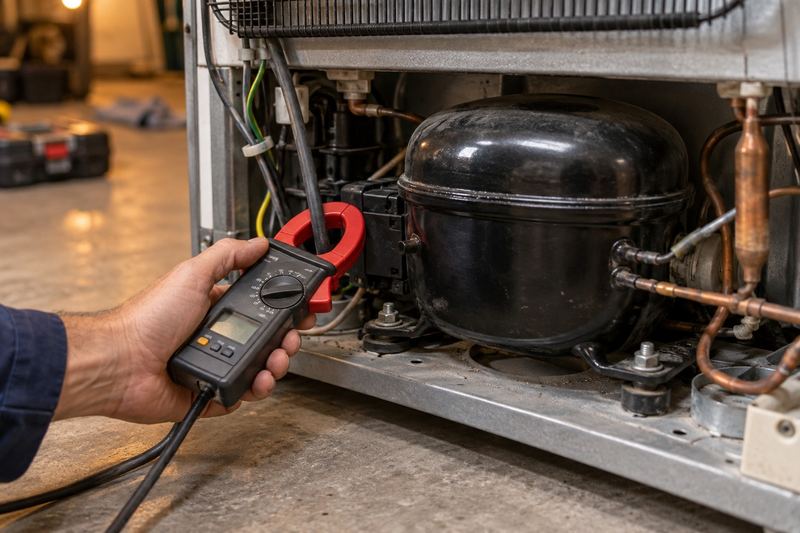
For heaters, toasters and light bulbs, volts × amps gives the true watts. For motors and compressors (fridges, pumps, air conditioners), the current and voltage don't line up perfectly, so volts × amps slightly overstates the real watts. The ratio between the two is called the power factor. You don't need to calculate it at home: using volts × amps gives you a number that is on the safe side for choosing a circuit, cord or generator. Motors also draw a short starting surge on top of this; see running vs starting watts.
Watts to amps conversion table
| Watts | Amps at 120 V | Amps at 240 V |
|---|---|---|
| 100 W | 0.83 A | 0.42 A |
| 500 W | 4.2 A | 2.1 A |
| 1,000 W | 8.3 A | 4.2 A |
| 1,200 W | 10 A | 5 A |
| 1,500 W | 12.5 A | 6.25 A |
| 1,800 W | 15 A | 7.5 A |
| 2,000 W | 16.7 A | 8.3 A |
| 2,400 W | 20 A | 10 A |
| 3,000 W | 25 A | 12.5 A |
| 3,600 W | 30 A | 15 A |
| 5,000 W | 41.7 A | 20.8 A |
| 7,200 W | 60 A | 30 A |
| 10,000 W | 83.3 A | 41.7 A |
Values are rounded. Loads above about 1,800 W are not plug-in 120 V appliances in a typical home; they are hard-wired or use 240 V outlets.
How many amps is 1,500 watts?
1,500 watts is 12.5 amps at 120 V and 6.25 amps at 240 V. That number matters because so many plug-in appliances top out at 1,500 W: space heaters, hair dryers, microwaves (input power), electric kettles and air fryers. At 12.5 amps, one of them already exceeds a 15-amp circuit's 12-amp continuous limit on its own. Run two on the same circuit and the breaker will likely trip.
How many watts can a 15-amp or 20-amp circuit handle?
Multiply the breaker rating by the voltage, then allow for the 80% rule for loads that run for hours at a time:
| Circuit | Maximum | Continuous (80%) |
|---|---|---|
| 15 A, 120 V | 1,800 W | 1,440 W |
| 20 A, 120 V | 2,400 W | 1,920 W |
| 30 A, 120 V (e.g. RV hookup) | 3,600 W | 2,880 W |
| 30 A, 240 V | 7,200 W | 5,760 W |
| 50 A, 240 V | 12,000 W | 9,600 W |
The 80% rule is an electrical code convention: a load that runs continuously (three hours or more) should use no more than 80% of the circuit's rating. A space heater running all evening on a 15-amp circuit, at 1,500 W, is already above the 1,440 W continuous figure, which is one reason heaters should be plugged straight into a wall outlet with nothing else on that circuit.
The same math applies to generator outlets and extension cords. A generator's 120 V, 20 A receptacle can deliver up to 2,400 W, even if the generator itself is rated higher. When planning what a generator can run, start with our generator size calculator.
What is the difference between kW and kWh?
A kilowatt (kW) is 1,000 watts, a rate of power use at a moment in time. A kilowatt-hour (kWh) is an amount of energy: 1,000 watts used for one hour.
- A 1,500 W heater running for one hour uses 1.5 kWh.
- A refrigerator that draws about 150 W while its compressor runs, cycling on roughly 40% of the time, uses about 1.45 kWh a day.
- Your utility bills you per kWh. Generators are rated in kW (how much they can run at once); batteries and power stations are rated in kWh or Wh (how much they store).
Formula: kWh = watts × hours ÷ 1,000. To see how a home's daily kWh compares with what backup equipment can supply, read how many kWh a house uses.
How do you convert amp-hours to watt-hours?
Batteries are often rated in amp-hours (Ah), but power stations and appliance use are measured in watt-hours. Multiply amp-hours by the battery's voltage:
Wh = Ah × volts
- 100 Ah at 12 V = 1,200 Wh
- 50 Ah at 12.8 V (a common lithium iron phosphate battery voltage) = 640 Wh
- 20,000 mAh (20 Ah) power bank at 3.7 V = 74 Wh
Once you have watt-hours, you can estimate runtime: runtime ≈ Wh × 0.85 ÷ average watts. A 1,200 Wh battery feeding a 50 W load would last roughly 1,200 × 0.85 ÷ 50 ≈ 20 hours. That is an estimate; inverter losses and usable battery depth vary by model. The power station runtime calculator handles this for you, and how long will a power station last explains the details.
How do I find the watts or amps of my appliance?
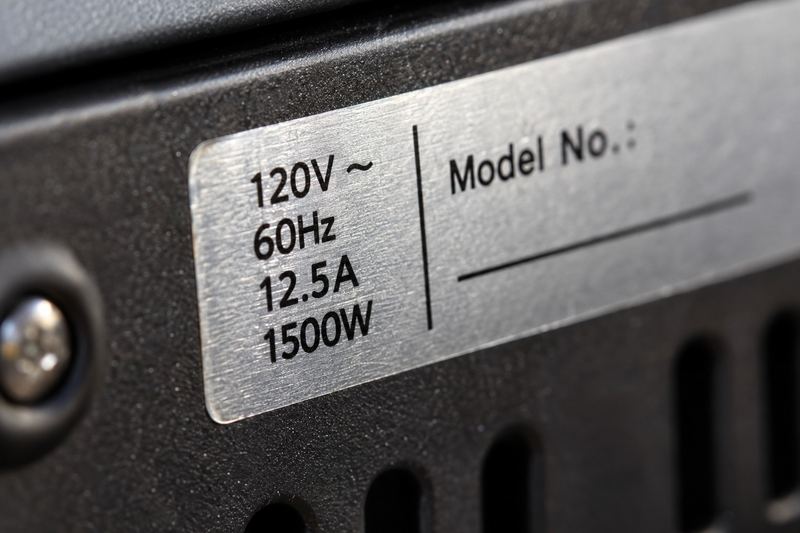
Check the rating label, usually on the back or bottom of the appliance or inside the door. It lists watts, or volts and amps you can multiply. A plug-in watt meter shows what the appliance actually draws. Our guide on how to measure appliance watts covers each method, and the appliance wattage list has typical figures for common household items.
Questions people ask
How many amps is 1,000 watts?
At 120 V, 1,000 watts is about 8.3 amps. At 240 V it is about 4.2 amps.
How many watts is 15 amps?
At 120 V, 15 amps is 1,800 watts. For a load that runs for hours, keep it under 80%, or 1,440 watts.
How many watts is 30 amps?
At 120 V, such as a 30-amp RV hookup, it is 3,600 watts. At 240 V it is 7,200 watts.
Can I convert watts to amps without knowing the voltage?
No, you need the voltage. In US homes, use 120 V for ordinary outlets and 240 V for large appliances such as dryers, ranges and water heaters.
Is 1,500 watts too much for an outlet?
A standard 15-amp, 120 V outlet can supply 1,500 W, but that uses almost all of the circuit. Don't add other large loads on the same circuit and don't run it through a light-duty extension cord.
Why does my generator list both watts and amps?
Watts tell you the total power it can supply; the amp ratings on each outlet tell you how much a single receptacle can deliver. Both limits apply, so check that each cord and outlet can carry its share of the load.